
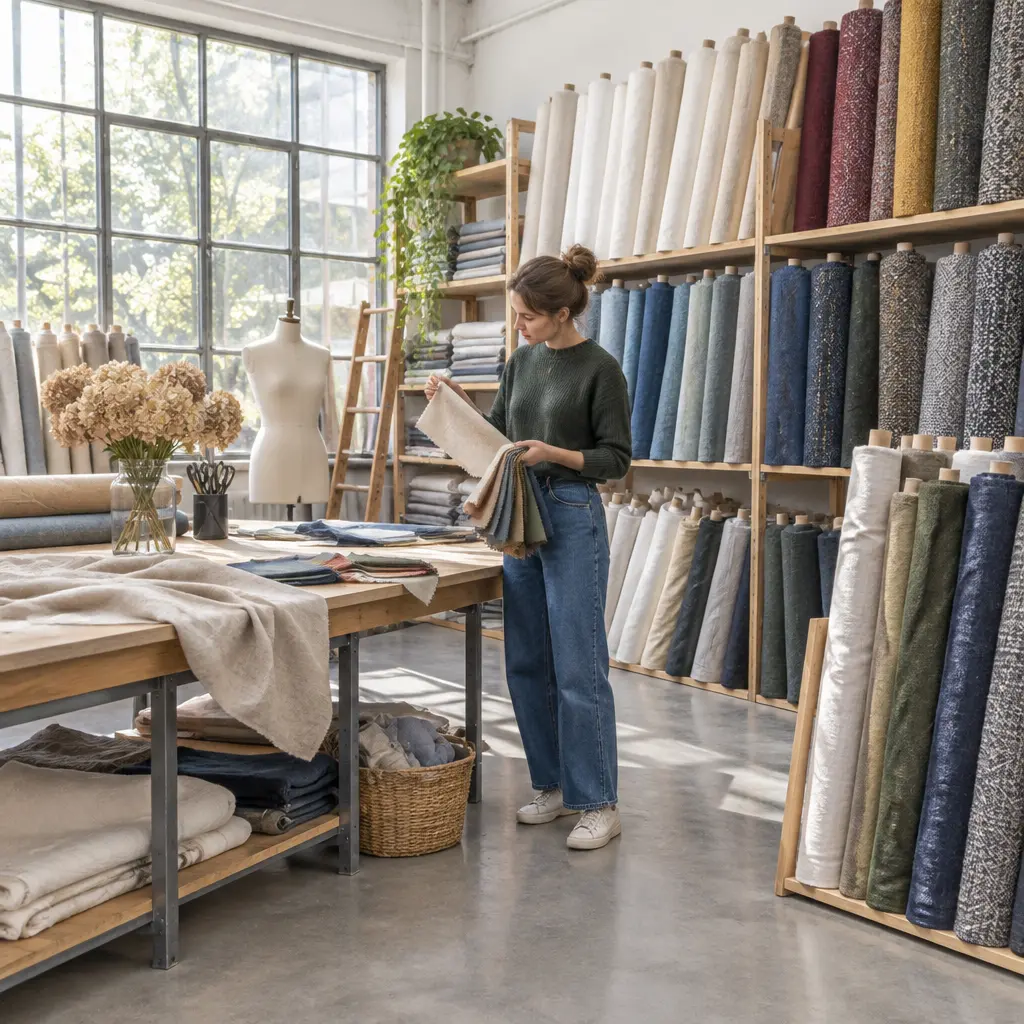
Fiber performance matching is the practice of choosing textile fibers and fabric constructions according to the climate, activity, and frequency of use they must withstand. The right choice balances warmth, moisture handling, drying time, durability, care requirements, and comfort: wool and insulating synthetics can suit cold conditions, while breathable linen or lightweight cotton may work well in hot, dry settings. No fiber is universally best, and fabric construction and garment layering matter as much as fiber type. The U.S. Environmental Protection Agency estimates that 11.3 million tons of textiles entered U.S. municipal solid waste in 2018, underlining why matching materials to actual use and care needs can matter for both service life and waste reduction.
Fiber Performance Matching for Climate and Use Frequency
Textile performance depends on a system: fiber chemistry, yarn structure, fabric weave or knit, finishing, garment design, and the conditions of use. The International Organization for Standardization’s ISO 9237, for example, specifies a method for measuring air permeability of fabrics, illustrating that comfort-related performance can be measured rather than inferred from fiber labels alone. A practical match therefore begins by identifying the wearer’s climate and activity, then considering how often the item will be worn, washed, dried, and repaired.
Climate Matching Defines Fiber Performance
Climate matching means selecting a textile system that supports comfort and protection under expected temperature, humidity, wind, precipitation, and activity. The American Society of Heating, Refrigerating and Air-Conditioning Engineers describes thermal comfort as a response influenced by environmental conditions as well as personal factors such as clothing and activity. This is why the same fiber can feel suitable in one garment and uncomfortable in another: a loose linen shirt and a tightly woven linen shell do not exchange air or retain heat in the same way.
Hot and Humid Conditions
For hot, humid weather, useful characteristics include low fabric weight, airflow, and a construction that does not cling heavily when damp. Linen, cotton, and some regenerated-cellulose fabrics can feel comfortable in warm conditions, but their performance varies with weave, thickness, fit, and finishing. Cotton absorbs moisture readily but can dry slowly, particularly in humid air; linen’s crisp, open constructions can promote airflow, though linen garments may wrinkle and can be less resilient to repeated creasing. Lightweight polyester or nylon can dry faster, but a dense or poorly ventilated synthetic garment may still feel clammy. Air permeability testing under ISO 9237 provides a way to compare fabric airflow under specified test conditions; it does not, by itself, predict comfort in every real-world situation.
Cold and Dry Conditions
Cold-weather insulation depends substantially on trapped air and garment loft, not simply on whether a fiber is natural or synthetic. Wool fibers have a crimped structure, and wool garments can provide insulation while managing moisture in ways that many wearers find comfortable. Polyester fleece and synthetic fills are often selected for low weight, fast drying, and performance in damp conditions. Down can provide high insulation for its weight when kept dry and lofted, but loses much of its insulating effectiveness when wet and may take longer to dry. In practice, a layered system—moisture-managing base layer, insulating midlayer, and weather-resistant outer layer—often performs better than relying on a single “warm” fiber.
Rain, Wind, and Variable Weather
Rain and wind call for a distinction between fibers and fabric systems. A tightly woven nylon or polyester shell can resist wind and shed light rain, while a waterproof-breathable membrane or coating may be needed for sustained precipitation. The Federal Trade Commission’s textile labeling guidance distinguishes fiber content from other product characteristics, a useful reminder that a fiber name alone does not establish whether a garment is waterproof. Check the finished garment’s stated water-resistance, seam construction, care instructions, and intended activity. For changing weather, quick-drying layers and adjustable ventilation can be more practical than a heavy fabric that is comfortable only in a narrow temperature range.
Use Frequency Determines Durability and Care Needs
Use frequency is how often an item is worn or used, with washing and drying cycles adding another form of material stress. A frequently worn uniform, work shirt, or everyday pair of trousers needs a different balance of abrasion resistance, shape retention, colorfastness, and easy care than an occasional-use garment. The Federal Trade Commission’s Care Labeling Rule requires care instructions for many covered textile garments, supporting informed maintenance decisions. However, a care label does not guarantee a particular service life: construction quality, fit, laundering practice, and repairability also matter.
Frequent Wear and Abrasion
For high-frequency use, evaluate the complete fabric rather than selecting by fiber reputation alone. Nylon is commonly used where strength and abrasion resistance are priorities; polyester often offers useful shape retention and quick drying; and cotton can be comfortable and repairable but may shrink, fade, or wear through depending on fabric weight and finishing. Denim illustrates the importance of construction: its twill weave and yarn selection contribute to performance alongside its cotton content. Test data such as abrasion resistance, seam strength, and pilling tendency can help compare products, but results should be interpreted against the intended use rather than treated as universal rankings.
Repeated Laundering and Drying
Repeated laundering can cause shrinkage, color loss, surface fuzzing, or damage to elastane and finishes. Cotton and linen may require attention to shrinkage and creasing; wool can felt or shrink if exposed to unsuitable combinations of heat, agitation, and moisture; and synthetic fibers can retain oily soils or develop odors if cleaning is inadequate. The U.S. Department of Energy notes that clothes dryers use substantial energy compared with air-drying, making quick-drying garments and line drying relevant both to convenience and household energy use. Follow the garment’s care label, avoid unnecessarily hot cycles, and use repair or spot cleaning where appropriate to reduce avoidable wear.
Stretch, Recovery, and Fit Retention
Stretch performance is especially important in activewear, fitted garments, and clothing worn through repeated movement. Elastane (also known as spandex or Lycra, a brand name) is commonly blended with other fibers to add stretch and recovery, but heat and harsh care can shorten its useful life. A blend’s percentage alone does not reveal how well the garment will retain shape; knit structure, yarn quality, seam design, and finishing all contribute. For frequently worn stretch garments, check the manufacturer’s care guidance and look for evidence of testing or a clear performance guarantee.
Fiber Families Offer Different Performance Trade-Offs
Fiber families provide a useful first screen, but they are not final performance verdicts. The Textile Exchange’s Preferred Fiber & Materials Market Report tracks the scale and development of different fiber categories, while product-level performance still depends on how those fibers are spun, woven or knitted, finished, and maintained. The following comparisons are practical starting points, not substitutes for examining garment specifications and testing.
Natural Cellulosic Fibers: Cotton and Linen
Cotton and linen are plant-based cellulosic fibers. Cotton is widely used because it is soft, versatile, and easy to construct into fabrics ranging from lightweight jersey to heavy canvas. Linen, made from flax, is often chosen for warm-weather clothing and household textiles because it can be made into breathable, crisp fabrics. Both can absorb moisture, but absorption does not necessarily mean fast drying. When frequent washing is expected, fabric weight, colorfastness, shrinkage control, and the availability of straightforward repairs are important selection criteria.
Animal Fibers: Wool and Down
Wool is a protein fiber used in base layers, sweaters, suits, and outerwear. Its crimp and the construction of wool fabrics can support insulation and comfort across a range of conditions, though care and drying requirements vary by garment. Down is an insulating fill rather than a typical woven apparel fiber; its performance depends on loft, fill quality, and protection from moisture. For damp climates or activities where garments may become wet, compare the care burden and wet-weather behavior of wool, synthetic insulation, and down rather than choosing on warmth claims alone.
Synthetic Fibers: Polyester and Nylon
Polyester and nylon are synthetic fibers used in sportswear, shells, bags, and high-wear clothing. They are often valued for durability, low weight, and relatively quick drying, although actual results depend on fabric construction and finishing. Their environmental profile also deserves consideration: the European Environment Agency has reported that synthetic textiles are a significant source of microplastic releases, including fibers shed during use and washing. A practical response is to buy durable products suited to real needs, follow care instructions, avoid unnecessary laundering, and consider filtration options where available; no single intervention eliminates shedding.
Blends and Regenerated Cellulose
Blends combine fibers to balance properties—for example, cotton-polyester fabric may pair cotton’s familiar hand with polyester’s shape retention and drying behavior. Regenerated-cellulose fibers such as viscose, modal, and lyocell are made from processed cellulose and can have a soft drape, but their performance and environmental impacts vary by production method, fabric design, and care. Blends may complicate recycling because separating fiber types can be difficult. When choosing a blend, identify the specific need it addresses and check whether the garment’s expected lifespan justifies its care and end-of-life trade-offs.
A Practical Method for Selecting Materials
A repeatable selection process reduces guesswork and helps buyers avoid paying for performance they do not need. For apparel, compare items in the context of climate, activity, and maintenance; for upholstery or bedding, substitute exposure to sunlight, friction, spills, and cleaning frequency for weather and exercise.
- Define the conditions: record typical temperature, humidity, wind, precipitation, activity level, and whether the item will be worn next to skin.
- Set the use frequency: distinguish occasional wear from daily use, and estimate how often the item will be washed, dried, or exposed to abrasion.
- Choose required properties: prioritize insulation, airflow, drying speed, stretch, abrasion resistance, or easy care rather than seeking every benefit at once.
- Check the whole product: review fiber percentages, fabric weight, weave or knit, seams, closures, finishes, and care instructions.
- Compare evidence: look for relevant test methods or product specifications, such as air permeability, abrasion, water resistance, or colorfastness, and confirm that the test relates to the intended use.
- Plan maintenance and end of life: consider repair, washing energy, expected service life, and whether local reuse or recycling options exist.
As a simple example, a person commuting in a hot, humid city may prioritize a lightweight, loose-fitting, breathable shirt that can be washed frequently, while a winter hiker may need a layered system with a moisture-managing base, insulating midlayer, and protective shell. In both cases, the garment’s construction and care plan are as important as its fiber label.
Conclusion: Match the Material to the Real Conditions
Climate matching identifies the comfort and protection a textile must provide; use-frequency matching identifies the durability and care demands it must tolerate. Fiber families offer useful clues, but fabric construction, garment design, and finishing determine how those properties work in practice. Because textile waste is substantial and synthetic-fiber shedding is a documented concern, selecting durable materials that suit actual conditions—and maintaining and repairing them well—can support longer use. Before your next purchase, write down the climate, activity, and care frequency the item must handle, then compare product specifications rather than relying on fiber names alone.
Sources: U.S. Environmental Protection Agency, Textiles: Material-Specific Data, https://www.epa.gov/facts-and-figures-about-materials-waste-and-recycling/textiles-material-specific-data; International Organization for Standardization, ISO 9237:1995 Textiles—Determination of the Permeability of Fabrics to Air, https://www.iso.org/standard/16869.html; American Society of Heating, Refrigerating and Air-Conditioning Engineers, ASHRAE Handbook—Fundamentals, https://www.ashrae.org/technical-resources/ashrae-handbook; Federal Trade Commission, Threading Your Way Through the Labeling Requirements Under the Textile and Wool Acts, https://www.ftc.gov/business-guidance/resources/threading-your-way-through-labeling-requirements-under-textile-wool-acts; Federal Trade Commission, Care Labeling Rule, https://www.ftc.gov/legal-library/browse/rules/care-labeling-rule; U.S. Department of Energy, Clothes Dryers, https://www.energy.gov/energysaver/clothes-dryers; Textile Exchange, Materials Market Report, https://textileexchange.org/knowledge-center/reports/materials-market-report/; European Environment Agency, Microplastics from Textiles: Towards a Circular Economy for Textiles in Europe, https://www.eea.europa.eu/publications/microplastics-from-textiles-towards-a