
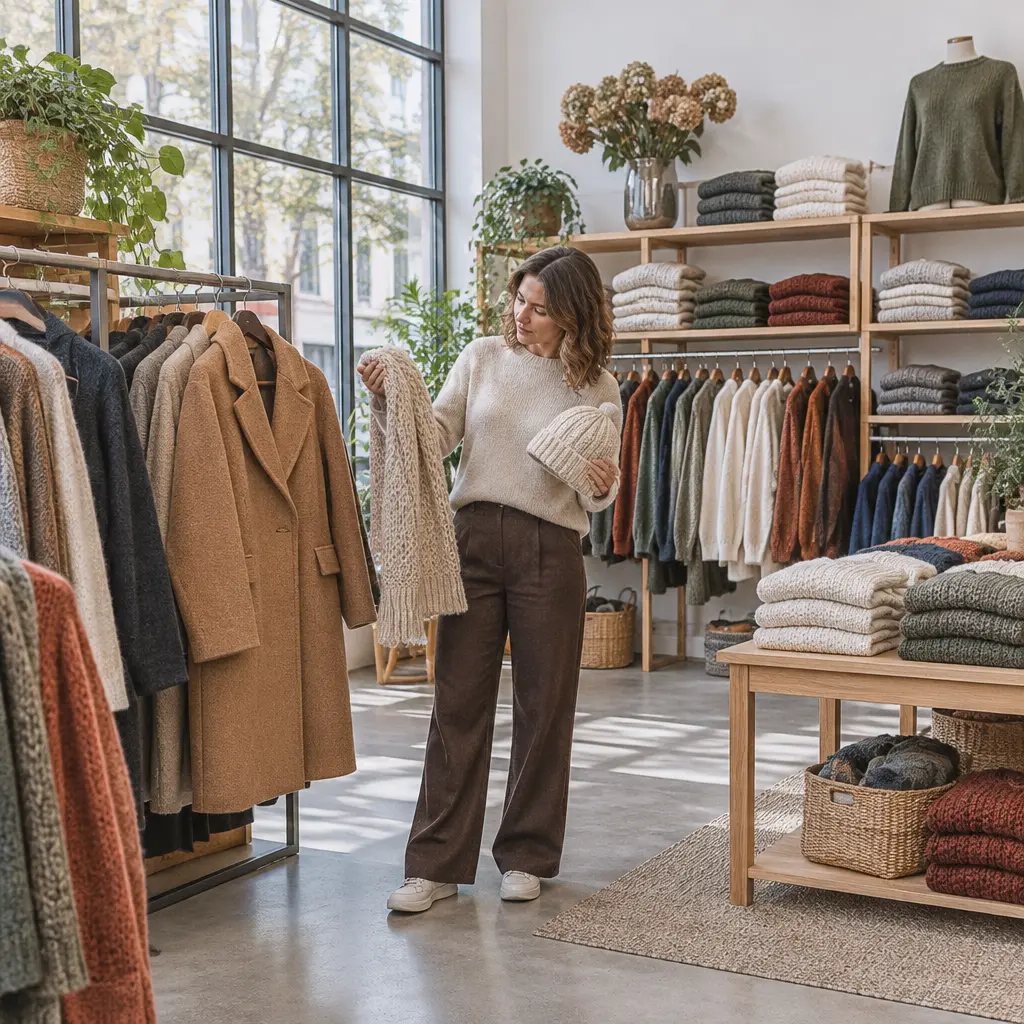
Knitted accessories are garments and add-ons made by interlocking loops of yarn, from scarves and hats to gloves, socks, and shawls. Choosing the right pieces means matching fiber, warmth, fit, color, and care needs to your wardrobe and climate. That matters because accessories can extend the usefulness of existing clothing without requiring a complete outfit change: the U.S. Environmental Protection Agency estimates that 11.3 million tons of textiles were landfilled in the United States in 2018, making thoughtful use and care of clothing especially relevant. This guide compares accessory types, explains how materials and construction affect performance, and offers practical ways to coordinate, buy, and maintain knitted pieces.
Knitted Accessories: Types, Materials, and Wardrobe Uses
A knitted accessory is a wearable item made by forming connected yarn loops, either by hand or machine. The Craft Yarn Council describes knitting as a process in which stitches are formed from loops of yarn; the resulting fabric’s feel and behavior depend on factors such as fiber, yarn construction, stitch pattern, and gauge. Accessories in this category include scarves, cowls, hats, headbands, gloves, mittens, socks, shawls, and wraps.
These items serve different purposes. A close-fitting hat reduces exposed head area, while mittens enclose fingers together and generally provide more warmth than fingered gloves. A scarf or wrap offers adjustable coverage, and socks add insulation inside footwear. The best choice is therefore not simply the thickest item: it is the accessory that suits the wearer’s activity, local conditions, clothing layers, and tolerance for care requirements.
Scarves, Cowls, and Shawls
Scarves, cowls, and shawls are knitted neck and shoulder layers. A scarf is a long strip that can be wrapped or draped; a cowl is a closed loop worn around the neck; and a shawl is a broader piece designed to cover the shoulders or upper body. These forms differ in coverage and ease of styling: cowls stay in place, scarves offer adjustable wrapping, and shawls can function as an indoor layer.
For everyday wear, consider the neckline of coats and sweaters. A compact cowl can fit beneath a high collar, whereas a long scarf may suit an open coat. A light shawl can add warmth indoors without the bulk of outerwear. The U.S. National Weather Service advises dressing in layers in cold conditions; a neck or shoulder accessory can serve as one adjustable layer, but it should complement—not replace—appropriate protection for severe weather.
Hats, Headbands, Gloves, and Mittens
Headwear and handwear are knitted accessories designed to cover areas that may be exposed during cold-weather activities. Hats cover the head, headbands protect the ears while leaving more of the head uncovered, gloves separate the fingers, and mittens enclose them together. A snug hat is useful for daily wear, while a headband can be more comfortable during exercise or in milder conditions.
Choose gloves when finger movement matters, such as handling keys or using tools; choose mittens when warmth is the priority and the task allows fingers to remain together. For outdoor use, fit matters: an overly tight item can feel restrictive, while a loose hat or glove may let cold air in. Check whether the knit is dense enough for the intended conditions and whether the material can tolerate frequent wear and washing.
Knitted Socks and Leg Warmers
Knitted socks cover the feet and may extend to the ankle or higher; leg warmers cover the lower legs without enclosing the feet. Socks should work with the shoe’s fit and intended activity. Thick socks can make footwear feel tight, while a fine, smooth knit may suit close-fitting shoes. Leg warmers are more adaptable for layering over tights or leggings, but they do not replace socks or properly fitted footwear.
For active use, consider moisture management, seam placement, and how well the sock stays in position. The American Podiatric Medical Association emphasizes choosing footwear that fits properly; socks are part of that fit system, so a warm pair that crowds the toes may be a poor practical choice. For a wardrobe accessory, match the sock’s color and visible height to the outfit as well as to the shoe.
Knitted Accessories: Fiber and Construction Choices
Fiber is the material from which yarn is made, while construction describes how the yarn and stitches form the finished fabric. The two choices influence warmth, softness, stretch, durability, weight, and care. The Federal Trade Commission’s textile labeling rules require most textile products to identify fiber content, helping shoppers compare materials rather than relying on a generic label such as “wool-like.”
A useful starting point is to match the material to the accessory’s job. A soft fiber may be desirable at the neck, a hard-wearing blend may suit frequently used socks, and a lightweight yarn may work better for indoor layering than a bulky one. Labels and care instructions matter because fibers respond differently to washing, heat, and friction.
Wool and Other Animal Fibers
Wool is a natural animal fiber commonly used in cold-weather accessories; other animal fibers include cashmere, alpaca, and mohair. Wool fibers can form insulating fabrics and may absorb moisture vapor, but comfort varies by fiber type, yarn, knit, and individual sensitivity. A fine wool may feel soft against the skin, while some coarser yarns can feel scratchy.
Animal-fiber accessories can be suitable for hats, scarves, and gloves when warmth is important. Read the care label before buying: some pieces require hand washing or dry cleaning, and heat or agitation can cause shrinkage or felting. For a sensitive wearer, test a small area against the skin or choose a lining or a different fiber rather than assuming that every wool item feels alike.
Cotton, Linen, and Plant-Based Fibers
Cotton and linen are plant-based fibers used in knitted accessories, particularly lighter pieces. They can be comfortable in mild conditions and are often chosen for their breathable feel, but they may provide less insulation per layer than a lofty wool knit. Their suitability depends on yarn thickness, stitch density, and the amount of coverage.
A cotton scarf or headband can suit transitional weather or indoor wear, while a dense cotton hat may work for cool rather than severe conditions. Check whether the item is likely to stretch or lose shape with use, and follow the label’s washing instructions. Plant-based fibers are not automatically lower-impact in every case: environmental effects depend on farming, processing, dyeing, transport, and product lifespan.
Synthetic Fibers and Blends
Synthetic fibers such as acrylic, polyester, and nylon are manufactured materials often used alone or blended with natural fibers. They can help produce accessible, easy-care, or hard-wearing accessories, depending on the yarn and construction. Nylon, for example, is frequently added to socks to improve durability, while acrylic may be used in warm, lightweight knitwear.
Blends combine fiber characteristics, but the label does not tell the whole story: stitch density and finishing also affect performance. Compare the stated fiber percentages, care instructions, and intended use. Synthetic textiles can release microfibers during laundering; the European Environment Agency identifies textile products as a source of microplastic release, so washing less often when appropriate and using gentler laundry practices can help reduce wear and fiber shedding.
Knitted Accessories: Fit, Color, and Outfit Coordination
Fit and color determine whether an accessory works naturally with the clothes already in a wardrobe. A well-chosen piece should be comfortable, proportionate to the wearer and outerwear, and easy to combine with more than one outfit. Rather than buying a separate accessory for every look, consider which gaps the wardrobe actually has: everyday warmth, a lighter transitional layer, or a distinctive accent.
Choose Fit for Comfort and Function
Fit is the relationship between an accessory’s dimensions and the body or clothing layer it covers. Hats should stay in place without pressure; gloves should allow finger movement; and scarves should provide the desired coverage without obstructing movement. When trying on an item, wear it with the coat or shoes it is meant to accompany, since layering changes how much room is available.
For practical selection, check stretch recovery, opening size, length, and bulk. A very thick scarf may bunch beneath a fitted coat, and a loose sock may wrinkle inside a shoe. If the accessory is intended for sport or commuting, test the range of motion and whether it remains secure during activity.
Coordinate Color, Texture, and Proportion
Color coordination means selecting shades that complement the wardrobe, while texture and proportion describe how an accessory’s surface and scale relate to the rest of an outfit. A neutral accessory can repeat across many outfits; a bright or patterned piece can serve as a focal point. Pairing a heavily textured knit with simpler clothing can create contrast without making the outfit feel crowded.
A practical approach is to identify the most-used coat and shoes, then choose accessories that work with both. For example, a charcoal hat and scarf can coordinate with black, navy, or camel outerwear, while a patterned shawl can bring color to a simple dress or sweater. These are styling guidelines rather than fixed rules: personal preference and the occasion should guide the final choice.
Build a Small, Versatile Collection
A versatile collection is a limited group of accessories that covers different conditions and outfits. It might include one warm hat, one pair of gloves or mittens, a neutral scarf, and a lighter neck layer. The right number depends on climate, commuting habits, laundry routines, and personal style; there is no universal wardrobe count.
Before buying, consider a simple cost-per-wear comparison: divide the item’s price by the number of times you expect to wear it. This is a planning tool, not a guarantee of value, but it can highlight whether a special-occasion piece or an everyday basic better serves the wardrobe. Repairability, durability, and compatibility with existing clothes also affect long-term usefulness.
Knitted Accessories: Care, Durability, and Responsible Buying
Care and purchasing choices affect how long knitted accessories remain wearable. Good habits include following the care label, storing items clean and dry, and repairing small snags before they spread. The EPA’s estimate of 11.3 million tons of textiles landfilled in the United States in 2018 provides context for why extending garment life and avoiding unnecessary purchases can matter, although that figure covers textiles broadly rather than knitted accessories alone.
Read Labels and Follow Care Instructions
A care label gives instructions for cleaning and handling a textile product. Check it before washing, especially for animal fibers, delicate stitch patterns, or accessories with embellishments. Washing too aggressively can cause shrinkage, stretching, pilling, or damage; when hand washing is specified, gently support the item rather than twisting it, and dry it in the shape recommended by the manufacturer.
For storage, keep clean accessories dry and avoid hanging heavy knits for long periods if their weight may stretch them. Fold hats, scarves, and sweaters where practical, and store seasonal items in a clean space. These steps are broadly useful, but the product label takes priority because yarn blends and finishes vary.
Assess Durability and Repairability
Durability is an item’s ability to withstand expected wear, while repairability is how readily it can be restored when damaged. Examine seams, edges, stitch consistency, and areas that experience friction, such as sock heels and glove fingertips. A loose loop or small hole may be repairable; damage left unattended can grow with continued use.
A real-world wardrobe example is a pair of wool-blend socks reinforced with a more durable fiber: the blend may be chosen for a balance of comfort and repeated wear, while a worn heel can sometimes be darned rather than discarded. Whether repair is worthwhile depends on the damage, the wearer’s skills, and the cost and quality of the replacement. Choosing an item that can be maintained is one practical way to support longer use.
Buy with Use and Impact in Mind
Responsible buying means considering more than the initial price: intended use, material, care burden, likely lifespan, and whether the accessory fills a real wardrobe need. The United Nations Environment Programme has highlighted the environmental pressures associated with textile production and consumption. Its broad findings concern the textile sector as a whole, not the specific impact of any one scarf or hat, so product-level claims should be treated cautiously.
To make a considered choice, compare fiber labels, look for clear care guidance, and favor a size and style you will use regularly. Secondhand shopping, mending, and sharing or passing on unwanted accessories can also extend product use. No single fiber is automatically the most sustainable choice in every situation; buying less, choosing suitable quality, and keeping an item in use are practical considerations across material types.
Conclusion: Choose Knitted Accessories That Earn Their Place
The right knitted accessories match a wardrobe’s needs through suitable type, fiber, fit, and styling. Scarves, hats, gloves, socks, and wraps each provide different coverage; wool, plant-based fibers, synthetics, and blends offer distinct care and performance considerations. A versatile color palette, comfortable fit, clear care instructions, and attention to durability make accessories easier to wear and maintain.
Start by identifying the conditions and outfits your current wardrobe does not cover, then choose one useful piece that complements what you own. Check the label, try it with the clothing or shoes it will accompany, and maintain it according to its care instructions. For further guidance, consult textile-label information from the Federal Trade Commission, fiber and knitting resources from the Craft Yarn Council, and clothing-use guidance from environmental agencies.
Sources: U.S. Environmental Protection Agency, “Textiles: Material-Specific Data,” https://www.epa.gov/facts-and-figures-about-materials-waste-and-recycling/textiles-material-specific-data; Craft Yarn Council, “Learn to Knit,” https://www.craftyarncouncil.com/learn-to-knit; U.S. National Weather Service, “Winter Weather Safety,” https://www.weather.gov/safety/cold-wind-chill; Federal Trade Commission, “Threading Your Way Through the Labeling Requirements Under the Textile and Wool Acts,” https://www.ftc.gov/business-guidance/resources/threading-your-way-through-labeling-requirements-under-textile-wool-acts; American Podiatric Medical Association, “Shoe Fitting,” https://www.apma.org/Patients/FootHealth.cfm?ItemNumber=1514; European Environment Agency, “Microplastics from Textiles: Towards a Circular Economy for Textiles in Europe,” https://www.eea.europa.eu/publications/microplastics-from-textiles-towards-a; United Nations Environment Programme, “Sustainability and Circularity in the Textile Value Chain,” https://www.unep.org/resources/publication/sustainability-and-circularity-textile-value-chain