
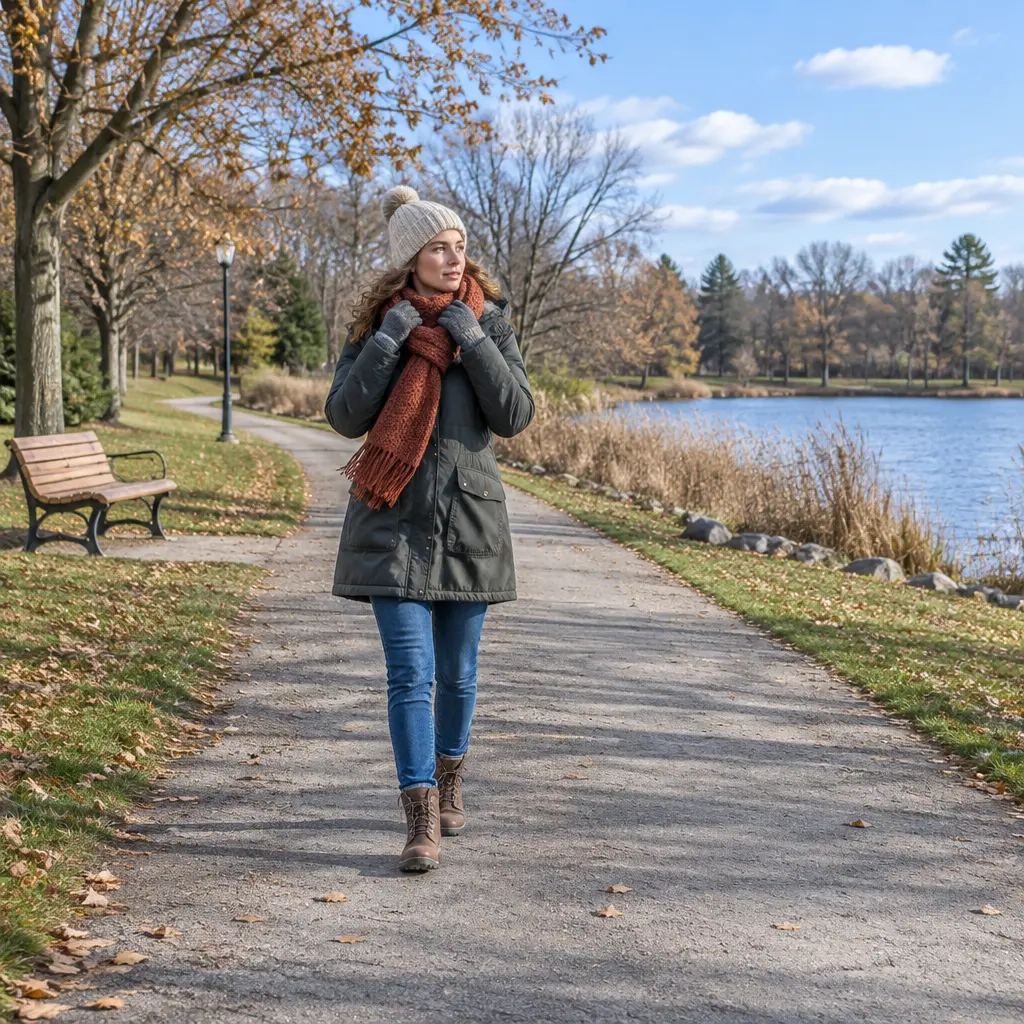
Knitted accessories—such as hats, scarves, gloves, and socks—help keep the body warm by trapping relatively still air near the skin and reducing heat loss. How well they work depends on more than thickness: fiber, knit structure, fit, moisture, wind, and activity all matter. The National Weather Service identifies wind and wetness as important contributors to heat loss, while textile research shows that insulation depends on a fabric’s structure and the air it holds. Understanding these factors helps explain why a wool hat can be useful in freezing wind, why a damp cotton scarf may disappoint, and why breathable layers are often better during exercise.
How knitted accessories provide insulation in different conditions
Thermal insulation is a material’s ability to slow heat transfer between a warmer body and a cooler environment. The U.S. Environmental Protection Agency describes clothing as one way people adapt to cold conditions; in practical terms, knitted accessories insulate by holding air within yarns and loops and by covering areas where heat can escape. Their performance is not fixed: wind can push warm air through an open knit, and moisture can reduce comfort and increase heat loss.
The main accessory types are headwear, neckwear, handwear, and leg or foot coverings. Each protects a different area, so the best combination depends on exposure. A close-fitting beanie can cover the ears, a scarf can protect the neck and lower face, mittens can keep fingers together, and wool socks can add warmth inside footwear. These items supplement, rather than replace, weather-appropriate clothing and shelter.
Hats and headbands: covering exposed areas
A knitted hat is a head covering that reduces exposure and creates an insulating layer around the scalp and ears. Its benefit comes from covering skin and retaining air—not from a special rule that a fixed percentage of body heat always escapes through the head. Heat loss varies with the amount of skin exposed, the surrounding conditions, and the rest of a person’s clothing. A headband can protect the ears while allowing more heat to escape from the top of the head, which may suit mild weather or strenuous activity.
Fit and coverage matter: a hat that slips off the ears leaves them exposed, while a very tight or damp hat may feel uncomfortable. In windy weather, a dense-knit hat or one worn under a wind-resistant hood generally offers more protection than a loose, open-knit style alone.
Scarves and cowls: reducing neck and face exposure
A scarf is a knitted strip worn around the neck; a cowl is a closed loop of fabric. Both add coverage and can limit cold air reaching the neck and lower face. A scarf’s warmth depends on how closely it sits, how much skin it covers, and whether air moves through its stitches. In a strong breeze, wearing it beneath a jacket collar or outer shell helps reduce drafts. During exercise, however, covering the mouth and nose can become uncomfortable as moisture accumulates, so the fabric may need to be loosened or adjusted.
Mittens and gloves: balancing warmth with dexterity
Knitted gloves separate the fingers, supporting tasks that require dexterity. Mittens enclose the fingers together, allowing them to share warmth and often providing better insulation for the hands, though they make fine tasks harder. The National Weather Service advises protecting extremities in cold conditions; knitted handwear is most useful when it fits comfortably and remains dry. In wet snow or rain, a knitted layer beneath a water-resistant outer glove or mitten can be more practical than knit fabric alone.
Socks and leg warmers: warmth shaped by footwear
Knitted socks surround the foot with a fabric layer, while leg warmers cover the lower legs without enclosing the feet. Sock warmth depends on fiber, thickness, moisture management, and available space inside a shoe or boot. A very thick sock can make footwear tight; compression may reduce comfort and leave less room for insulating air. In cold conditions, choose socks and footwear that fit together without constriction, and change damp socks when possible.
How fiber and knit structure affect warmth
Fiber is the material from which yarn is made, while knit structure describes how yarn loops form the fabric. These characteristics influence insulation, breathability, drying, weight, and feel. The American Sheep Industry Association describes wool as naturally crimped fiber; that structure can help create air spaces in wool textiles. But no fiber is warm in every situation: the garment’s construction, fit, condition, and exposure are also important.
Wool: useful warmth across changing conditions
Wool is an animal fiber commonly used in hats, socks, and other cold-weather accessories. Its crimped fibers and yarn structure can help trap air, and wool can absorb moisture vapor while often feeling less clammy than a similarly damp fabric against the skin. These qualities can make wool a useful choice for cool, variable conditions. However, a wool accessory is not waterproof: prolonged exposure to rain or wet snow can leave it saturated, heavy, and less comfortable. Care labels also matter, since some wool items can shrink or felt if washed improperly.
Cotton and synthetic fibers: matching material to use
Cotton is a plant-based fiber valued for softness and breathability, but cotton garments can hold substantial moisture and may take longer to dry than many synthetic fabrics. For a dry commute or casual indoor use, a cotton knit may be comfortable; for prolonged cold exposure, sweating, or wet weather, staying dry becomes more important. Synthetic fibers such as polyester are often selected for quick-drying performance and durability, though warmth still depends on the yarn and fabric construction. A fiber label alone cannot predict how warm an accessory will be.
Knit density, thickness, and layering
Knit density describes how closely loops are packed, and thickness describes the fabric’s depth. A dense or bulky knit can hold more air and block drafts better than a very open knit, but it may also be warmer than needed during activity. Layering offers flexibility: a thin knitted liner under a wind- or water-resistant shell can combine comfort with protection from the elements. The National Weather Service’s cold-weather guidance emphasizes staying dry and dressing appropriately for conditions, principles that apply to accessories as well as outerwear.
How knitted accessories perform in different weather and activity
Weather changes the way an accessory performs. Still, dry cold favors insulation; wind increases convective heat loss; precipitation can wet the fabric; and exercise creates body heat and sweat. The Centers for Disease Control and Prevention advises taking precautions in cold weather and recognizing signs of cold-related illness. Knitted accessories are most effective when chosen for the conditions and adjusted as those conditions change.
Dry cold and everyday wear
In dry cold, a comfortable wool or synthetic hat, scarf, and gloves can add warmth by covering exposed skin and retaining air. For example, someone walking to work may use a beanie and gloves outdoors, then remove or loosen them indoors to avoid overheating. Comfort is a practical guide: if the wearer begins to sweat, reducing insulation can help prevent moisture buildup that later feels cold.
Wind and open-knit exposure
Wind increases heat loss by moving warmed air away from the body and through porous fabric. A loose-knit scarf or hat may still provide some insulation, but it is less effective against strong drafts than a dense knit paired with a wind-resistant outer layer. The National Weather Service’s wind-chill guidance explains that wind makes exposed skin lose heat faster; wind chill is a measure of how cold conditions feel on exposed skin, not a change in the actual air temperature.
Rain, snow, and damp conditions
Wetness can reduce comfort and make it harder to stay warm, especially when clothing remains damp in cold air. A knitted hat or glove should not be treated as waterproof unless it has a specifically protective construction. For wet snow or rain, use knitted accessories under a water-resistant shell where practical, and carry a dry replacement for long outings. If a garment becomes wet, changing into dry clothing is safer than relying on the knit alone to maintain warmth.
Exercise and changing heat needs
During exercise, muscles generate heat and sweating can make an overly warm accessory uncomfortable. A lighter hat or headband may be suitable for brisk activity, while a warm, dense hat may be preferable during low-activity periods in severe cold. Adjust layers before becoming soaked with sweat, and pay attention to changing wind, temperature, and exertion. For extended outdoor activity, plan opportunities to dry or replace damp accessories.
Choosing and caring for knitted accessories
Choosing well means matching coverage, fit, material, and knit to the expected conditions. A useful accessory should stay in place, allow necessary movement, and work with the rest of the clothing system. Care also affects performance: stretched, damaged, or persistently damp knits may be less comfortable and less protective.
- For dry cold, prioritize comfortable coverage and a suitable insulating knit.
- For wind or wet weather, pair knitwear with a protective outer layer.
- For exercise, choose breathable pieces that can be loosened or removed.
- For hands, consider mittens when warmth is more important than finger dexterity.
- For socks, avoid a fit so tight that footwear constricts the foot.
- Follow the care label, dry accessories thoroughly, and replace items that no longer fit or function well.
Conclusion: knitted accessories work best as a weather-matched system
Knitted hats, scarves, gloves, mittens, and socks keep people warmer by covering exposed areas and trapping insulating air. Their performance depends on fiber, knit density, fit, moisture, wind, and activity—not simply on whether an item is thick. Wool can be a versatile option in cool conditions, while synthetics may be useful when quick drying matters; wind and rain call for additional protection. Choose accessories for the conditions, adjust them as activity changes, and consult cold-weather guidance from the National Weather Service and CDC for outdoor safety.
Sources: National Weather Service, Wind Chill, https://www.weather.gov/safety/cold-wind-chill-chart; National Weather Service, Cold Weather Safety, https://www.weather.gov/safety/cold; Centers for Disease Control and Prevention, Cold Stress, https://www.cdc.gov/niosh/cold-stress/about/index.html; U.S. Environmental Protection Agency, Climate Change and Human Health, https://www.epa.gov/climateimpacts/climate-change-and-human-health; American Sheep Industry Association, Wool Fiber, https://www.sheepusa.org/wool/wool-fiber