
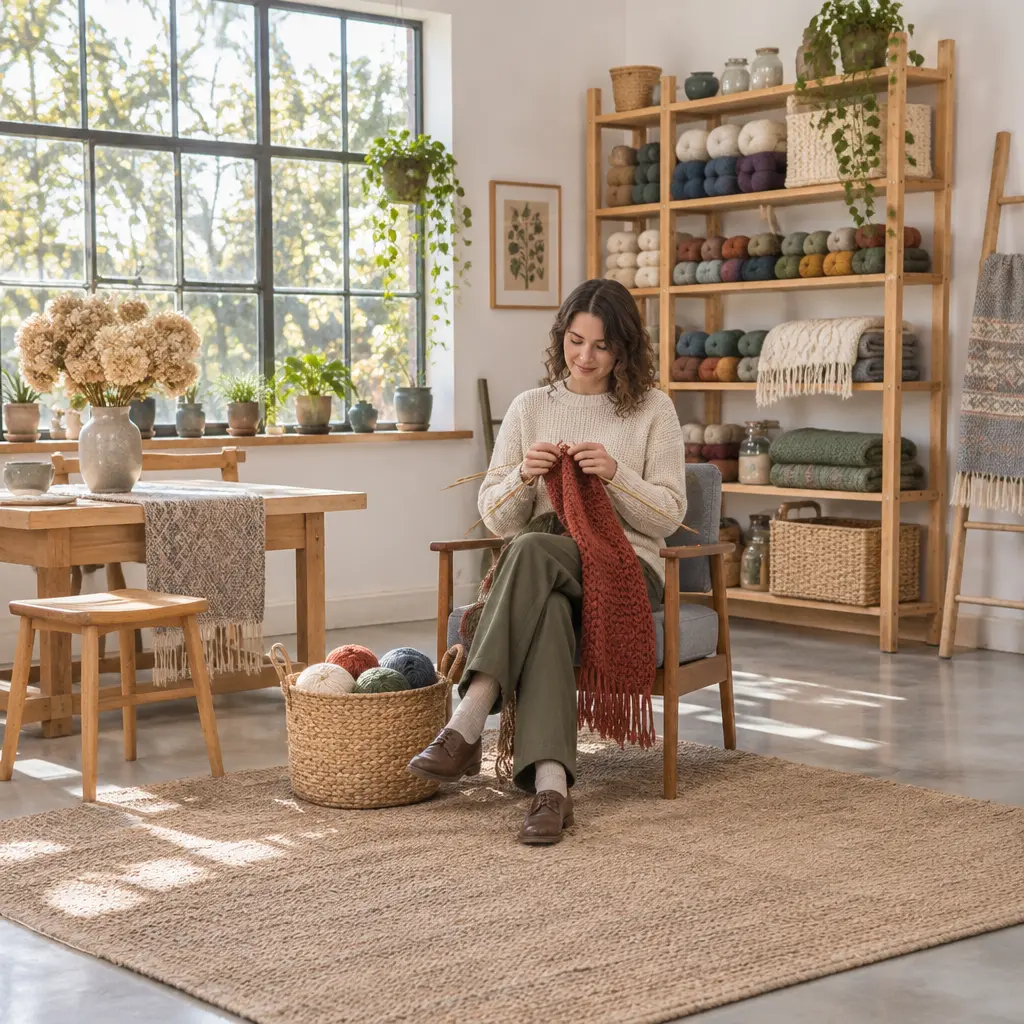
Knitted accessories are wearable or decorative items made by forming yarn into connected loops with knitting needles or machines. They include hats, scarves, gloves, socks, shawls, and headbands, combining warmth, fit, personal style, and practical craft. Their relevance extends beyond fashion: the International Labour Organization estimates that nearly 60 million people worldwide work in the textile and clothing sector, while the United Nations Environment Programme identifies textiles as a major source of environmental pressure. Understanding how knitted accessories are constructed, chosen, cared for, and sourced helps consumers balance comfort, durability, and impact.
Knitted accessories and their defining characteristics
A knitted accessory is an item made by interlocking yarn loops, generally through hand knitting or a knitting machine, for use as clothing, adornment, or both. The Craft Yarn Council describes knitting as a process in which stitches are formed from loops and held on needles until joined into fabric. Unlike woven cloth, which is made by interlacing lengthwise and crosswise yarns, knitted fabric is built from connected loops; this structure often gives it stretch and flexibility.
Common characteristics include warmth, adaptability, varied texture, and the ability to create shaped or seamless pieces. Performance depends on more than the stitch pattern: fiber, yarn thickness, gauge, construction, and finishing all affect softness, insulation, breathability, stretch, and resilience. A loose, airy knit may suit a shawl, while a dense ribbed fabric may be preferable for cuffs or a winter hat.
Construction, stitches, and gauge
Gauge is the number of stitches and rows measured over a specified area of knitted fabric. It matters because a small difference in stitch size can change the finished dimensions of a hat, glove, or sock. The Craft Yarn Council’s standard yarn-weight guidance offers a shared way to describe yarn categories, but it also advises knitters to check the pattern’s recommended gauge rather than relying on a weight label alone.
Basic stitch structures create distinct properties. Stockinette fabric is smooth on one side and tends to curl at its edges; garter stitch forms ridges and lies flatter; ribbing alternates knit and purl stitches to make a stretchy fabric often used at openings. Cables rearrange stitch order to create raised motifs, while lace uses deliberate openings for a lighter, more open effect. These are practical choices as well as decorative ones: ribbing helps a cuff fit, and dense stitches can reduce wind penetration.
Natural, manufactured, and blended fibers
Fiber is the material that makes up yarn, and its properties strongly influence how an accessory feels and performs. Wool can provide warmth and elasticity; cotton is absorbent and often feels comfortable in warm conditions; linen is valued for its cool, crisp hand; and silk is smooth with a characteristic sheen. Manufactured fibers such as acrylic and polyester can offer affordability, color variety, and easy-care options, though their performance varies by yarn and construction.
Blends combine fibers to balance qualities—for example, wool with nylon in hard-wearing socks, or cotton with acrylic for a washable, lower-cost item. No fiber is automatically the best choice for every use. Sensitive skin, climate, care requirements, expected wear, and personal preferences should all inform the decision. The U.S. Federal Trade Commission’s textile labeling rules require most covered textile products to disclose fiber content, helping shoppers compare materials.
Knitted accessories and their main types
Knitted accessories can be grouped by the part of the body they cover and the job they perform. Headwear, neckwear, handwear, and legwear are the most familiar categories, while shawls, wraps, and small decorative pieces offer additional ways to add warmth or visual interest. Moving from category to category also shows how the same materials and stitch techniques can serve different practical needs.
Hats, beanies, and headbands
Knitted headwear covers the head or ears, with designs ranging from close-fitting beanies to slouch hats and ear bands. A hat’s fit depends on head circumference, fabric stretch, and the amount of negative ease—the difference between body measurement and finished garment measurement. Ribbing is frequently used around the brim because it stretches and helps the edge stay in place.
Warmth is affected by coverage, wind exposure, fiber, and fabric density. A tightly knit wool hat may retain more insulating air than a very open lace design, though lining and layering can change the outcome. For children’s items, secure construction and appropriate sizing are especially important; loose ties or small detachable decorations can create safety concerns for very young children.
Scarves, cowls, and shawls
Scarves, cowls, and shawls are knitted neckwear and wraps. A scarf is an elongated strip worn around the neck; a cowl is typically a closed loop; and a shawl is a broader wrap that can cover the shoulders. These forms range from compact, dense winter accessories to lightweight lace pieces intended for layering or decoration.
Length, width, drape, and edge finish determine how a wrap can be worn. Smooth fibers and open stitches generally create fluid drape, while springy wool and textured patterns can produce a fuller shape. A scarf made in garter stitch is a common beginner project because the stitch is simple and reversible, whereas lace shawls require attention to repeated increases and pattern instructions.
Gloves, mittens, and fingerless handwear
Knitted handwear includes gloves with separate fingers, mittens with fingers grouped together, and fingerless gloves that leave fingertips exposed. Mittens generally simplify construction and keep fingers together, while gloves support more independent movement. Fingerless designs can preserve dexterity for tasks such as using tools or a touchscreen, but provide less coverage.
Fit is particularly important because hands move frequently and small sizing errors can affect comfort. Cuffs, thumb gussets, and finger shaping help the fabric follow the hand. For outdoor use, a close-fitting inner layer beneath a larger mitten can create a flexible layering system, though the best combination depends on activity and conditions.
Socks, leg warmers, and small accessories
Knitted socks and leg warmers cover the feet or lower legs. Socks face repeated friction inside footwear, so yarn durability, heel construction, and a suitable fit matter. Commercial sock yarns often blend wool with a stronger synthetic fiber, but suitable care and well-planned reinforcement can also extend service life.
Smaller knitted accessories include wrist warmers, headbands, boot cuffs, and decorative collars. These items use less yarn than many garments and can be useful projects for practicing techniques. Their compact size does not eliminate the need for good finishing: seams, edges, and closures affect both comfort and how long the piece remains wearable.
Knitted accessories and making methods
Once a suitable accessory type is chosen, the next decision is how to make it. Hand knitting offers direct control over stitch formation and makes small-batch customization accessible; machine knitting can produce fabric more quickly and consistently, particularly at larger scales. Both methods rely on looped construction, but they differ in equipment, production speed, labor, and the range of practical design choices.
Hand knitting and customization
Hand knitting forms stitches with needles, commonly straight, circular, or double-pointed. It allows makers to adjust size, color, stitch pattern, and shaping as work progresses. A handmade accessory can be personalized for fit or preference, but hand production takes time, and consistent results require practice in tension and finishing.
A useful process is to check the pattern, make a gauge swatch, measure the intended wearer, and test care instructions on a sample when possible. The Craft Yarn Council’s pattern and yarn guidance can help beginners understand terminology and sizing. A small swatch is not wasted material: it can reveal whether a fabric is too stiff, too loose, or likely to change significantly after washing.
Machine knitting and commercial production
Machine knitting uses powered or hand-operated equipment to form loops in a controlled sequence. Industrial machines can produce knitted fabric efficiently and repeatably, supporting products such as socks, hats, and scarves. Product quality still depends on yarn selection, machine settings, garment assembly, and inspection; machine production does not by itself guarantee durability or responsible sourcing.
The International Labour Organization describes the garment and textile industries as major sources of employment, with nearly 60 million people working in the sector worldwide. That figure provides context for the human scale of clothing production, but it does not represent knitwear alone. Consumers interested in production conditions can look for clear information about manufacturing location, labor standards, and supply-chain accountability rather than assuming that a particular production method is inherently ethical.
Knitted accessories and care, durability, and environmental impact
An accessory’s useful life depends on how it is worn, cleaned, repaired, and stored. Care is especially consequential for knitted fabrics because loops can stretch, snag, or lose shape if handled roughly. At the same time, longer use and repair can reduce the need to replace an item as quickly, making maintenance part of both practical ownership and more considered consumption.
Washing, drying, and storage
Care instructions depend on fiber and construction, so the label should be checked before washing. Wool items may shrink or felt under heat and agitation; some acrylic and cotton items can tolerate machine washing, but may still stretch or change shape. When instructions allow, gentle washing, limited agitation, and drying flat can help preserve dimensions. Hanging a wet, heavy knit can pull it out of shape.
Clean accessories should be stored dry and protected from pests. Folding is generally safer than hanging for heavy knits. Removing surface pills with a fabric comb or suitable depilling tool can improve appearance, but aggressive cutting may damage yarn. Small snags are best handled by gently returning the loop to the fabric’s reverse side rather than cutting it.
Repair, reuse, and life-cycle considerations
Repair means restoring a damaged item so it can continue to be used. A loose seam, small hole, missing button, or pulled stitch may be fixable with basic sewing or darning. The Ellen MacArthur Foundation’s work on a circular economy for fashion emphasizes strategies such as using products longer, reuse, and repair as ways to reduce waste and keep materials in use.
Environmental impact varies across a product’s life cycle, from fiber production and dyeing to manufacturing, transport, washing, and disposal. The United Nations Environment Programme has highlighted the significant environmental footprint of textiles, including pressures associated with production and waste. This does not mean every knitted accessory has the same impact: material, production energy, durability, and frequency of use all matter. Buying fewer, more useful pieces and caring for them well are practical steps, though they cannot substitute for broader improvements in production systems.
Knitted accessories and choosing the right piece
Choosing an accessory is a matter of matching purpose, fit, material, and care needs. A warm outdoor hat, a lightweight decorative shawl, and a frequently washed pair of socks have different performance requirements. Considering these requirements before buying or making an item reduces the chance of choosing a piece that is uncomfortable, impractical, or short-lived.
- Identify the main use: insulation, sun protection, decoration, dexterity, or layering.
- Check size and fit, especially for hats, gloves, and socks.
- Review fiber content and care instructions rather than judging by appearance alone.
- Examine construction, including edges, seams, cuffs, and areas exposed to friction.
- Consider whether the item can be repaired and whether it suits the wearer’s climate and routine.
For example, a commuter who needs dexterity may prefer fingerless gloves, while someone spending time outdoors in cold weather may prioritize full coverage and a snug cuff. A washable blended yarn may be more convenient for a frequently used accessory, whereas a carefully maintained wool piece may suit someone who values elasticity and insulation. These are contextual choices, not universal rankings of fibers or designs.
Conclusion: knitted accessories as practical, expressive textiles
Knitted accessories are loop-constructed items whose function and appearance depend on fiber, stitch, gauge, shape, and finishing. Their main types—headwear, neckwear, handwear, and legwear—serve different needs, while hand and machine knitting offer distinct routes to making them. Thoughtful selection, appropriate washing, repair, and longer use can improve both satisfaction and durability.
Whether you are buying a scarf, choosing socks, or learning to knit a hat, begin with the item’s intended use and care requirements. Read fiber labels, check fit, and support repair and reuse where practical. For further learning, consult the Craft Yarn Council’s educational materials and the textile-care guidance supplied with individual products.
Sources: Craft Yarn Council, Learn to Knit and Yarn Standards, https://www.craftyarncouncil.com/; U.S. Federal Trade Commission, Threading Your Way Through the Labeling Requirements Under the Textile and Wool Acts, https://www.ftc.gov/business-guidance/resources/threading-your-way-through-labeling-requirements-under-textile-wool-acts; International Labour Organization, Textiles, Clothing, Leather and Footwear Sector, https://www.ilo.org/industries-and-sectors/textiles-clothing-leather-and-footwear; United Nations Environment Programme, Sustainability and Circularity in the Textile Value Chain, https://www.unep.org/resources/report/sustainability-and-circularity-textile-value-chain-global-stocktaking; Ellen MacArthur Foundation, A New Textiles Economy: Redesigning Fashion’s Future, https://ellenmacarthurfoundation.org/a-new-textiles-economy